
Insight
The Leadership Transition Problem: Why Orgs Lose Months Every Year
Most community organizations reset every year or two when leaders turn over. Here's why organizational memory keeps walking out the door — and how to stop it.


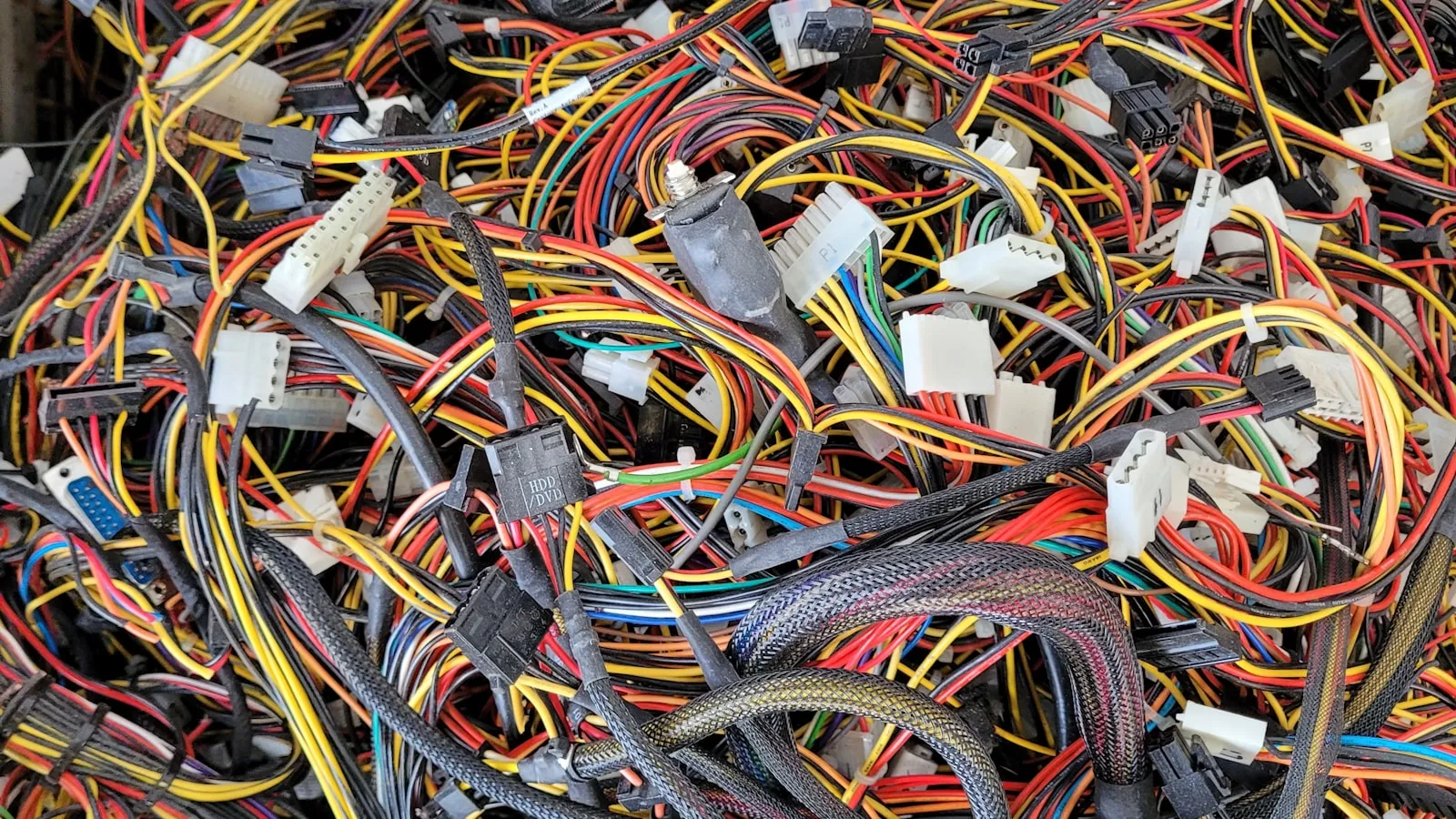
It's August, and a new treasurer is staring at a Google Sheet for the first time.
There are eleven tabs. One is named "FINAL_v3," another is "do not touch." Some columns have formulas; some have numbers typed over the formulas. The dues tab cross-references a Venmo history that lives in someone else's phone — someone who graduated in May and isn't answering texts. The new treasurer's first official act isn't planning a budget. It's spending a weekend reverse-engineering a stranger's mental model of where the money went.
This is the moment most organizations discover that their free tools were never actually free.
To be clear up front: Google Sheets, Google Forms, and Google Drive are excellent. So are Venmo, Excel, and a free Linktree page. They're well-built, reliable, and they solve real problems. None of this is a knock on those tools.
The issue is simpler than "good tool versus bad tool." It's that a spreadsheet was built to be a spreadsheet — not a member database, not a finance system, not an events platform, and definitely not the institutional memory of a 200-person organization. When you ask a free consumer tool to be all of those things at once, you don't pay in dollars. You pay in time, risk, and opportunity. Those costs are just harder to see on a price tag.
The most obvious cost of a fragmented free stack is time, and it shows up in three predictable ways.
Manual reconciliation. When dues come in through one app, get logged in a spreadsheet by hand, and have to be matched against a bank deposit, somebody is doing that matching with their eyes and a coffee. Every payment is a tiny act of data entry. Multiply it across a semester and a few hundred members, and "tracking dues" quietly becomes a part-time job.
Duplicate entry. A member signs up through a Google Form. Their name gets copied into the roster sheet. Then into the email list. Then into the event RSVP tab. The same human being gets typed into four places, and the moment one of those copies changes — a new email, a dropped membership — the others silently fall out of sync. Now you have four versions of the truth and no way to know which one is right.
Rebuilding at every transition. This is the expensive one, and it's invisible until it happens. Because the spreadsheet "made sense to exactly one person," every leadership handoff resets the clock. The new officer doesn't inherit a system; they inherit a puzzle. Hours that could have gone toward the actual mission go toward archaeology instead.
We've written before about how 80% of a community leader's time gets eaten by administrative logistics. Fragmented free tools are a big part of why. None of these tasks are hard. They're just endless — and they pull your best people away from the reasons they volunteered.
Time is the cost you feel. Risk is the cost you don't — right up until it lands all at once.
Your data lives in a personal account. When the roster is in someone's personal Google Drive and the dues history is in someone's personal Venmo, the organization doesn't actually own its own records. It's renting them from whoever happens to hold the login. If that person graduates, leaves on bad terms, or simply stops checking the account, the data doesn't transfer — it vanishes. A whole organization's memory can walk out the door inside one person's phone.
There's no real audit trail. A spreadsheet cell can be overwritten by anyone with edit access, and it won't tell you who changed it or why. When a number is disputed in a budget meeting — and eventually one always is — there's no neutral record to point to. Just conflicting memories and a sheet that quietly changed sometime last spring. For a treasurer, that's not a convenience problem. It's a trust problem, and we've seen how fast unclear finances turn into people problems.
Privacy and compliance get fuzzy. Member data — names, emails, payment details, sometimes more sensitive information — scattered across personal accounts and shared spreadsheets is hard to protect and harder to account for. Who can see the donor list? Who still has access to last year's form responses? With consumer tools, the honest answer is usually "we're not sure." For a nonprofit handling member or donor information, "we're not sure" is a genuine liability, not a paperwork detail.
Institutional memory evaporates. This is the quietest risk of all. The reason an event worked, the vendor who came through last minute, the policy the board agreed on two years ago — when that context lives in scattered docs and private chats, it doesn't survive the people who created it. Every organization that loses its memory ends up relearning the same lessons, and paying for them, again.
The hardest cost to measure is the one that never shows up — because it's the thing that didn't happen.
Every hour your treasurer spends reconciling Venmo is an hour they don't spend planning the fundraiser. Every weekend the new president spends decoding an old spreadsheet is a weekend they don't spend recruiting, mentoring, or simply being present. The admin doesn't just cost time. It crowds out the work that only a person can do.
You can see this in the events that quietly don't get run because organizing them through five disconnected tools felt like too much. In the new member whose application sat unread in a Google Form because nobody remembered to check it. In the leader who stepped down — not because they stopped caring, but because the logistics burned them out.
We won't put a fake dollar figure on any of that, because nobody can honestly measure the value of an event that never happened or a member who drifted away. But you already know it's real. You've felt it. It's the gap between the organization you meant to build and the one your tools left you the energy for.
Here's where most of these conversations go wrong. People frame it as "free tools versus paid software," as if the choice is between saving money and spending it.
That's the wrong axis.
The real question is fragmented versus integrated. A pile of free tools is fragmented by definition — each one solving its own slice, none of them talking to the others, with you as the human glue holding them together. A paid all-in-one suite might solve the fragmentation, but then you're back to the original problem: a budget your organization can't justify, and a paywall in front of the features you actually need.
For most community organizations, that's felt like a forced trade-off. Stay free and stay fragmented, or pay up to get something integrated. It's the same bind we've described as the nonprofit tech stack problem — too many tools, none of them built for how you actually work.
We didn't think you should have to choose.
We built OEASE so the answer to "fragmented or integrated?" doesn't cost you the answer to "free or paid?"
In one place, your members, finances, dues, events, recruitment, announcements, roles, and your organization's website all share the same source of truth:
And it's genuinely free. Not a starter tier, not "free for your first 25 members," not free until you hit the feature you came for. Every feature is available to every organization from day one.
So where's the catch? There isn't a hidden one — but in the spirit of this whole post, we'll name the one real cost honestly. OEASE is sustained by a small 1.3% platform fee on payments you process through Stripe (on top of Stripe's standard 2.9% + 30¢ per transaction; paid event ticketing adds a 3% service fee). If your organization never processes a payment through OEASE, you pay nothing — ever. That's it. That's the entire price. We've explained exactly why the platform is free and how that stays sustainable if you want the full reasoning.
It's a real cost, and we'd rather state it plainly than bury it the way a "free" spreadsheet buries its costs in your evenings and your risk exposure.
A spreadsheet costs nothing to open. That's true, and it's why so many organizations start there. But the price tag was never the whole story.
The fragmented free stack charges you in the hours your leaders don't get back, in the data sitting in a personal account one graduation away from gone, in the audit trail that doesn't exist when you need it, and in the events and relationships that quietly never happen. Those costs are real. They're just paid in a currency that doesn't show up on an invoice.
Technology should liberate human connection, not complicate it. Free consumer tools are wonderful at what they were built for — and they were never built to run your organization. The good news is you no longer have to choose between a budget you can afford and a system that actually holds together.
If your organization has been paying the hidden cost of "free" for years without naming it, it might be worth seeing what integrated and free can look like at the same time. You can start with OEASE whenever you're ready — and keep the spreadsheets for what they're actually great at.
Why We Threw Everything Away and Started Over
After two years of learning what community leaders actually need, we rebuilt OEASE from scratch. Here's the story behind v2 — and why starting over was the only honest choice.
How to Collect Membership Dues Online (Without Chasing Venmo)
Stop chasing dues through Venmo and spreadsheets. Here's how to collect membership dues online with payment links, automatic status updates, and receipts.